

Thousands of GERD Patients Cured Within Minimally Invasive Surgery
At the AdventHealth Digestive Health Institute, we specialize in minimally invasive techniques that restore function of the esophagus and stomach to help relieve gastroesophageal reflux (GERD). Combining surgical expertise with whole-person care ensures you receive personalized support at every step.
The Two Main Forms of Fundoplication
Our surgeons have treated thousands of patients with GERD and have some of the world’s most significant experience in treating it with fundoplication.
-
Nissen Fundoplication
With this procedure, the upper part of the stomach (the fundus) around the LES to strengthen this valve. When this is done, acid is prevented from flowing from the stomach into the esophagus.
-
Toupet Fundoplication
If the upper gastrointestinal study shows that food does not move down the esophagus well, your stomach will be wrapped around the LES three-quarters of the way instead of completely around as with a Nissen fundoplication.
Minimally Invasive Surgical Approaches Used at DHI
- Conventional Laparoscopic Fundoplication
-
Laparoscopic fundoplication has been around for more than 35 years, and DHI’s surgeons have offered more than 2,000 patients this approach. It involves five small incisions, including one at the belly button. Special instruments are inserted through theses incisions that allow the surgeon to see the surgical site and perform the operation. Laparoscopic fundoplication typically leads to superior outcomes with lasting results. The large majority of patients find that their GERD symptoms are significantly reduced, and many find complete relief from acid reflux.
- Laparo-Endoscopic Single Site Scarless Surgery (LESS) Fundoplication
-
Our surgeons are known for an operation that relieves or dramatically decreases GERD symptoms without a visible surgical scar. They perform nearly all fundoplications with a minimally invasive approach called laparo-endoscopic single site, or LESS.
When performed by an experienced surgeon, LESS fundoplication is equally as successful as conventional laparoscopic fundoplication. LESS involves the same surgical plan as conventional laparoscopic and robotic fundoplication. However, instead of several incisions, it requires only one very small incision in the umbilicus. Patients are left with only one scar, hidden in the belly button, and no visible signs of an operation. Also, compared to other fundoplication approaches, LESS surgery involves less pain, faster recoveries and shorter hospital stays.
- Endoscopic Radiofrequency Therapy (Stretta)
-
The Stretta procedure is another endoscopic approach to treat GERD. With this procedure, a thin tube called a catheter is inserted through the mouth and down to the lower esophageal sphincter (LES). Using low-level radiofrequency energy that heats the tissues of the LES and the part of the stomach joined to the LES, the physician can reshape these parts of the anatomy. The result is that the LES works better at keeping acid contents out of the esophagus.
Many patients experience a decrease in GERD symptoms after having a Stretta procedure and can stop taking PPIs. The procedure typically provides relief for at least five years. It's an effective option, especially for those who have previously undergone a sleeve gastrectomy weight-loss procedure.
- Hiatal Hernia Repair
-
A hiatal hernia occurs when part of the stomach pushes through the diaphragm into the chest cavity, often causing symptoms like chronic heartburn, chest discomfort or difficulty swallowing. When lifestyle changes and medications aren’t enough, surgical repair may be recommended. This procedure typically involves gently repositioning the stomach, reinforcing the valve between the stomach and esophagus, and repairing the diaphragm opening. Our surgeons often use minimally invasive techniques to reduce recovery time and discomfort and restore normal digestive function.
- Magnetic Sphincter Augmentation (LINX®)
-
A LINX procedure uses a ring of magnetic titanium beads that can be surgically placed to help stop GERD symptoms. The magnets help keep the LES tight while still allowing food to pass through normally. It's performed laparoscopically and usually requires one to two days in the hospital. Patients can typically return to work within one week.
- Transoral Incisionless Fundoplication (TIF)
-
Transoral incisionless fundoplication is an endoscopic treatment performed through the mouth — no external incisions required. The endoscope allows the surgeon to place an EsophyX device where the esophagus meets the stomach. EsophyX creates a 270-degree wrap similar to a surgical Toupet fundoplication. This wrap strengthens the closure between the esophagus and the stomach so that reflux no longer occurs.
This outpatient procedure requires little to no recovery time. While TIF may not be the best choice for every person, it can greatly benefit some patients. Studies show success rates comparable to traditional surgical fundoplication, and the majority of patients achieve enough symptom relief to discontinue proton pump inhibitors (PPIs).
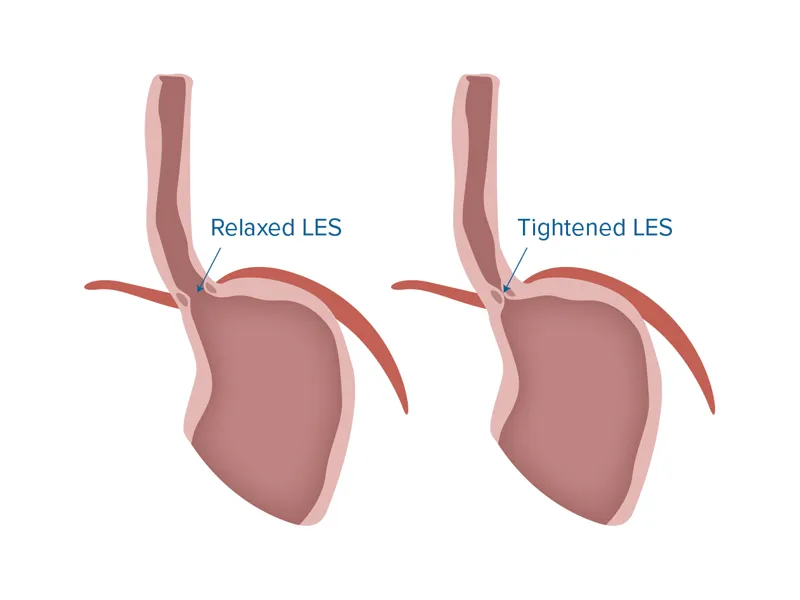
The Lower Esophageal Sphincter (LES) and Its Role in GERD
The lower esophageal sphincter (LES) is a ring of smooth muscle that connects the end of the esophagus with the start of the stomach. It acts as a one-way valve, allowing food and liquids to pass into the stomach while preventing stomach acid from flowing back up into the esophagus. This barrier is essential because the esophagus lacks the protective lining that the stomach has against acid. The LES operates involuntarily, controlled by your autonomic nervous system. When swallowing or belching, the LES relaxes (as shown in the first example on the left) and normally remains tight to stay closed otherwise (as shown in the second example on the right). When the LES does not function properly, stomach acid and partially digested food can reflux into the esophagus. If this backward flow occurs frequently or causes complications, it can develop into gastroesophageal reflux disease (GERD). Surgical interventions such as fundoplication can help restore its function by reinforcing the sphincter and reducing reflux.
Recover Faster With Minimally Invasive and Robotic Surgery
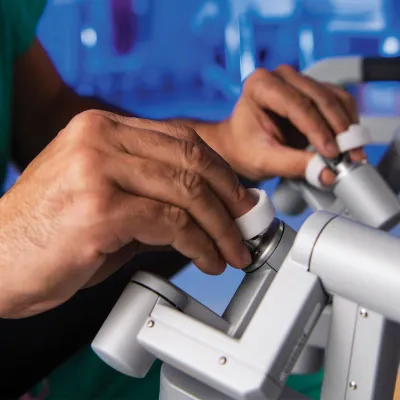
The expert surgeons at the AdventHealth Digestive Health Institute have a large depth of experience in offering minimally invasive surgery.

Meet Your Dedicated Experts
Our specialists are passionate about providing collaborative care that addresses your unique needs and goals while ensuring you feel informed and supported every step of the way. Learn more about our team and their areas of expertise.
Let Us Help You Find Relief From GERD
Whether you’re experiencing new symptoms or want a second opinion on a diagnosis, our dedicated digestive health experts are here to help you find answers and a path forward. Fundoplication works very well even when medication or lifestyle changes for GERD have not. To find out if surgery for GERD could be right for you, request an appointment today to take charge of your health and get the personal support you need.